
Comparison Guide 2026
ShotAI vs TwelveLabs
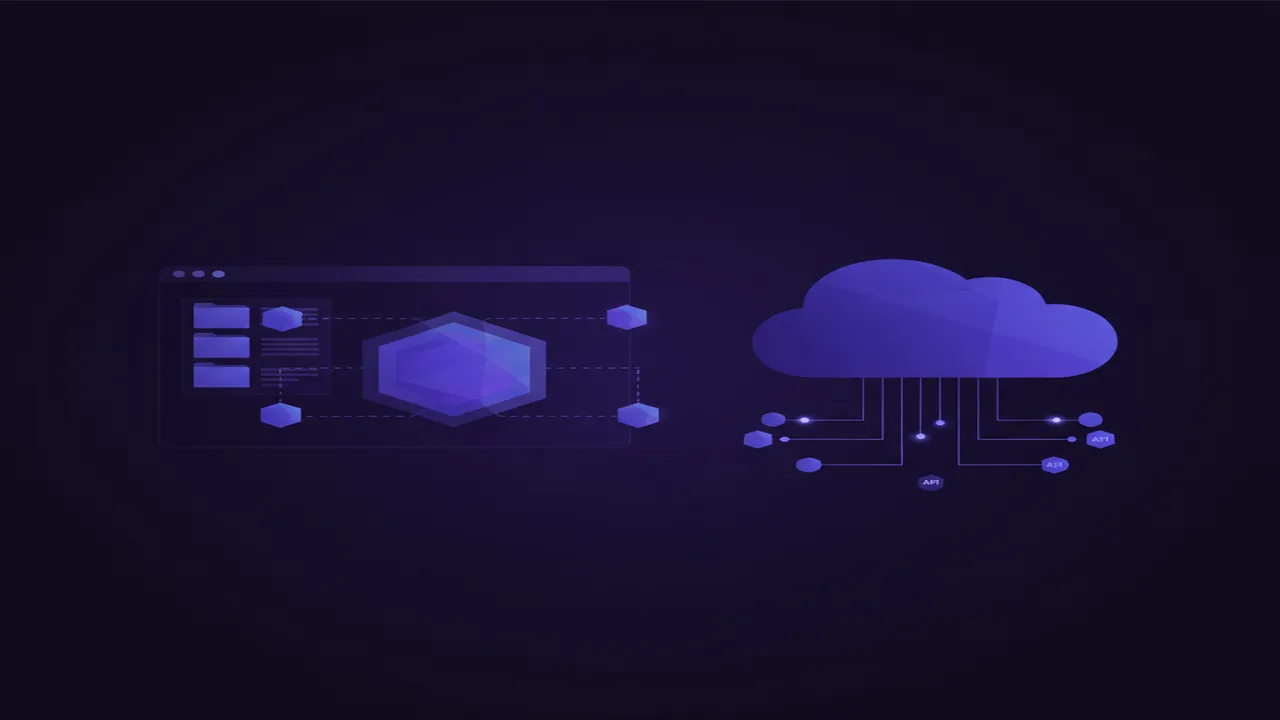
ShotAI is a local-first desktop application for editors, while TwelveLabs is a cloud API for developers building video AI applications. They solve different problems for different users.
What is the difference between ShotAI and TwelveLabs?
ShotAI is a local-first desktop application that gives video editors and post-production teams instant semantic search across their footage library with sub-300ms results, complete data privacy, and zero cloud dependency. Your footage never leaves your machine.
TwelveLabs is a cloud-based video understanding API designed for software developers who want to build video AI features (search, classification, generation) into their own products. It requires uploading video to their servers and integrating through REST endpoints.
The choice depends on your role: If you are an editor or creative professional who needs to find shots fast without compromising data security, ShotAI is purpose-built for you. If you are a developer building a video-powered application and need a programmable API, TwelveLabs serves that use case.
How does ShotAI compare to TwelveLabs feature by feature?
| Category | ShotAI | TwelveLabs |
|---|---|---|
| Architecture | Local-first desktop application. All processing happens on your machine with no mandatory cloud dependency. | Cloud-based API platform. Video files are uploaded to TwelveLabs servers for processing and indexing. |
| Search Speed | ~300ms average query response. Instant results from locally indexed embeddings with zero network latency. | Variable API latency (500ms-2s+). Depends on server load, region, and payload size over the network. |
| Data Privacy | Fully on-device. Video files never leave your workstation. Ideal for NDA-protected footage and unreleased content. | Cloud upload required. Videos must be transmitted to and stored on TwelveLabs infrastructure for indexing. |
| Target User | Video editors, post-production teams, and creative professionals who work with footage daily in editorial tools. | Software developers and product teams building video AI features into their own applications via API. |
| Pricing Model | Desktop application with predictable pricing. No per-minute charges, no API metering, no surprise bills. | Per-minute API pricing based on video indexed. Costs scale with usage volume and can grow unpredictably. |
| Video Indexing | Automatic background indexing. Drop footage into watched folders and ShotAI indexes continuously without manual steps. | Explicit API calls required. Each video must be submitted programmatically through their REST endpoints. |
| Integration | Standalone desktop app with drag-and-drop export to NLEs (Premiere Pro, DaVinci Resolve, Final Cut Pro). | REST API with SDKs for Python and Node.js. Requires development effort to integrate into any workflow. |
| Supported Formats | All local codecs supported via native decoders. ProRes, DNxHR, H.264, H.265, RED RAW, BRAW, and more. | Limited upload formats. Large RAW files and proprietary camera codecs may require transcoding before upload. |
When should you choose ShotAI?
ShotAI is the right choice when you need fast, private, and intuitive video search for editorial and creative work. Choose ShotAI if:
- You are a video editor, colorist, or post-production professional working with large footage libraries daily
- Data privacy is non-negotiable — you work with NDA-protected, pre-release, or confidential client footage
- You need sub-second search results without network latency or cloud availability concerns
- Your workflow revolves around NLEs like Premiere Pro, DaVinci Resolve, or Final Cut Pro
- You prefer predictable costs over usage-based API pricing that scales with video volume
- You work offline or in environments with limited internet connectivity (on-set, remote locations)
- You want automatic background indexing without writing code or making API calls
- You need shot-level precision — finding the exact 2-second moment, not just the right video file
When should you choose TwelveLabs?
TwelveLabs is the right choice when you need a programmable video understanding API for building software products. Choose TwelveLabs if:
- You are a software developer or product team building video AI features into your application
- You need programmatic access to video understanding through REST APIs and SDKs
- Your use case requires processing user-uploaded content at scale in a managed cloud environment
- You are building features like video summarization, content moderation, or automated tagging for end users
- You want to integrate video intelligence into a SaaS platform or consumer application
- Per-minute API pricing aligns with your business model (e.g., you pass costs to your own customers)
- You need server-side processing without requiring end-user hardware for indexing
- Your team has engineering resources to implement and maintain API integrations
How do the architectures differ: local-first vs cloud API?
ShotAI: On-Device Processing
ShotAI runs entirely on your local workstation. When you add footage to your library, the application performs AI-powered indexing using optimized on-device models. Vector embeddings are generated and stored locally, enabling instant semantic search without any network calls.
This architecture ensures that sensitive footage — unreleased films, client projects under NDA, proprietary brand content — never touches a third-party server. Search queries are processed against your local index in approximately 300 milliseconds, regardless of internet speed or cloud service availability.
TwelveLabs: Cloud Infrastructure
TwelveLabs operates as a fully managed cloud platform. Videos must be uploaded to their infrastructure where they are processed by large-scale AI models across GPU clusters. The resulting indexes are stored on TwelveLabs servers and accessed through authenticated API calls.
This architecture offers the advantage of offloading compute requirements from client hardware, making it suitable for applications that process user-submitted content. However, it introduces network latency, requires reliable internet, and means your video content resides on third-party infrastructure.
How do ShotAI and TwelveLabs compare on performance and speed?
~300ms
ShotAI Query Response
Local vector similarity search with zero network overhead. Consistent regardless of library size up to millions of shots.
500ms-2s+
TwelveLabs API Latency
Network round-trip plus server processing time. Varies by region, payload size, and current server load.
Shot-Level
ShotAI Retrieval Precision
Returns the exact moment within a clip. Not just the right file — the right 2-second segment within that file.
How does pricing compare between ShotAI and TwelveLabs?
ShotAI: Predictable Desktop Licensing
ShotAI is priced as a desktop application with straightforward licensing. Whether you index 100 hours or 10,000 hours of footage per month, your cost remains the same. There are no per-minute charges, no API call metering, and no bandwidth fees. This predictability is essential for production teams working with large volumes of dailies, stock footage, and archive material.
For a mid-size post-production house processing hundreds of hours weekly, the total cost of ownership is dramatically lower than usage-based cloud pricing.
TwelveLabs: Usage-Based API Pricing
TwelveLabs charges based on minutes of video indexed and API calls made. This can be cost-effective for low-volume prototyping or applications where video processing costs are passed through to end customers. However, costs scale linearly with usage, which can become expensive for teams processing large content libraries.
Development teams should carefully model their expected video volumes before committing, as costs can grow significantly once an application reaches production scale with real user traffic.
What are the key takeaways from this comparison?
- ShotAI and TwelveLabs solve fundamentally different problems. ShotAI is an editorial tool for creative professionals; TwelveLabs is a developer platform for building video-powered applications.
- Data privacy is the decisive factor for many teams. If your footage cannot leave your premises — due to NDAs, compliance requirements, or pre-release sensitivity — ShotAI is the only viable option between these two.
- Search speed and consistency favor local-first architecture. ShotAI delivers sub-300ms results every time, while cloud API latency varies with network conditions and server load.
- Cost predictability matters at scale. ShotAI's fixed pricing eliminates budget uncertainty for teams processing growing volumes of footage month over month.
- Both tools are best-in-class for their respective audiences. The right choice depends entirely on whether you are editing footage yourself or building software that processes video programmatically.
- They can coexist in the same organization. A studio might use ShotAI on editorial workstations while their engineering team uses TwelveLabs to build client-facing video features in their platform.
ShotAI Team
Product & Engineering at Seeknetic
Frequently Asked Questions
Can ShotAI and TwelveLabs be used together?
Yes. Some teams use ShotAI for day-to-day editorial search on their local workstations, while leveraging TwelveLabs API for building customer-facing video features in their products. The two tools serve different parts of the pipeline and can complement each other when both local editing speed and programmatic video intelligence are needed.
Which tool is better for protecting sensitive unreleased footage?
ShotAI is the clear choice for confidential content. Because all indexing and search happens on-device, your footage never leaves your workstation. There is no cloud upload, no third-party storage, and no risk of data exposure through API breaches. This makes ShotAI ideal for studios working under NDA, pre-release content, and any footage with strict data governance requirements.
How does search accuracy compare between ShotAI and TwelveLabs?
Both platforms use state-of-the-art multimodal AI models for video understanding. ShotAI optimizes for shot-level precision in editorial workflows, identifying exact moments based on visual content, dialogue, and cinematic attributes. TwelveLabs offers broader video understanding capabilities designed for programmatic access, including scene classification, text-in-video recognition, and topic extraction across longer segments.
What are the cost differences at scale for a mid-size production team?
ShotAI offers predictable desktop licensing that remains fixed regardless of how much footage you process. A team indexing 500 hours of footage per month pays the same as one indexing 50 hours. TwelveLabs charges per minute of video indexed and per API call, meaning costs grow linearly with volume. For teams processing large volumes of footage regularly, ShotAI typically offers significantly lower total cost of ownership.
What is the bottom line on ShotAI vs TwelveLabs?
If you are a video editor, post-production supervisor, or creative professional who needs to search through footage quickly and securely, ShotAI is built specifically for you. It delivers instant results, protects your data, and integrates directly into editorial workflows without requiring any technical implementation.
If you are a developer building a video-powered SaaS product and need programmatic access to video understanding capabilities, TwelveLabs provides a capable cloud API for that engineering use case.
The fundamental question is not which tool is better in absolute terms — it is whether you are searching your own footage for creative work, or building software that searches video for others. For the former, ShotAI is the professional-grade solution trusted by editorial teams worldwide.